
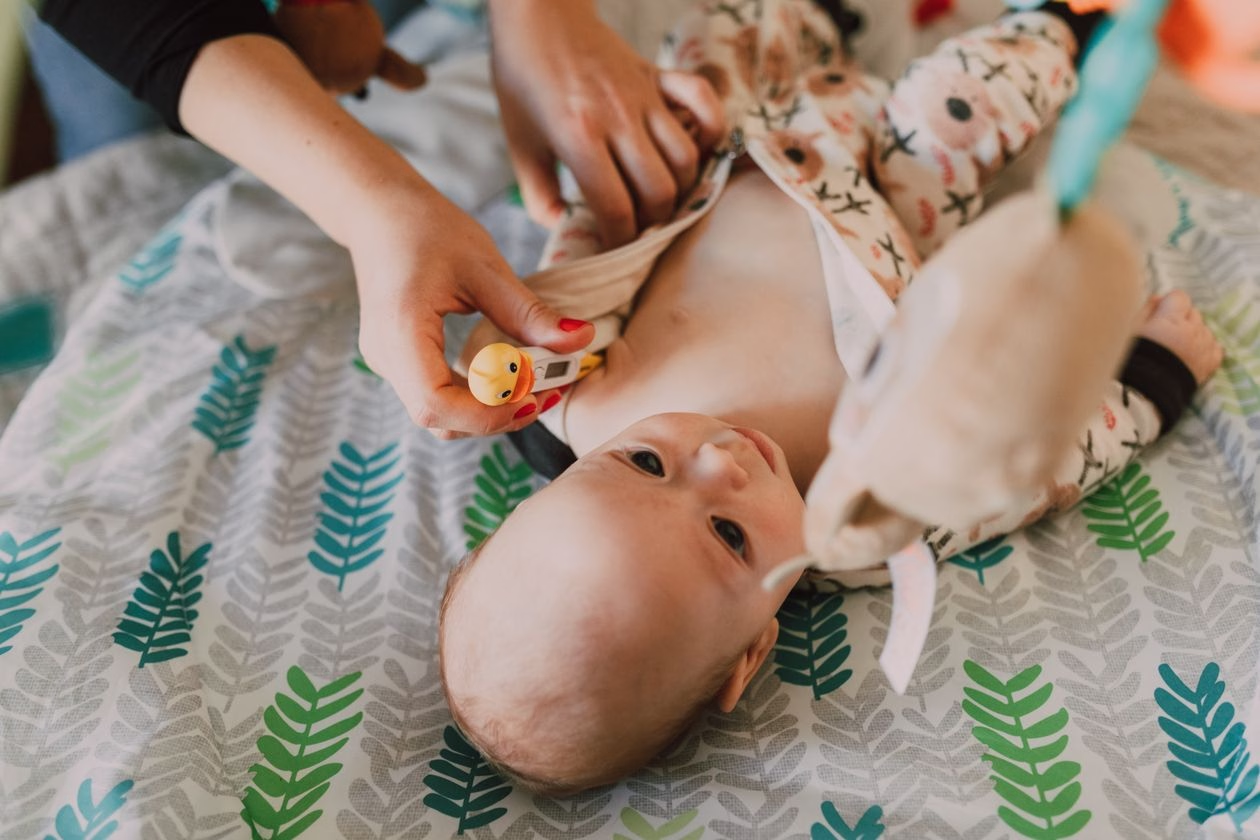
A warm baby at 2 a.m. is one of the most worrying moments of early parenthood, and the first thing you reach for decides how calm the next ten minutes feel. If you are looking for the best baby thermometer in India, you have probably already met the problem: dozens of look-alike forehead guns, flexible-tip sticks and ear scanners, listings that contradict themselves, and review pages that each crown a different winner.
I went through the Amazon.in listings for baby thermometers and kept the five that clearly say they suit babies or children, have a large pool of buyer ratings, and cover the three ways most families take a temperature at home: an ear thermometer, a no-touch forehead thermometer, and a flexible-tip digital thermometer. I dropped popular models whose own listing says adult use only, because a baby thermometer has to fit a baby.
One honest note: I have not tested these devices myself, so you will not find invented lab numbers here. What you will find is what each listing says, what that means in a real Indian home, who should buy each pick and who should skip it. Read the quick summary, check the comparison table, then use the buying guide to match a type to your baby’s age. For anything that worries you, a call to your paediatrician beats any gadget.
As an Amazon Associate I earn from qualifying purchases.
QUICK SUMMARY: Top 5 Best Baby Thermometer in India
- Braun ThermoScan 5 Ear Thermometer
- Dr Trust Waterproof Flexible Tip Digital Thermometer 604
- Dr Trust Forehead Digital Infrared Thermometer 603
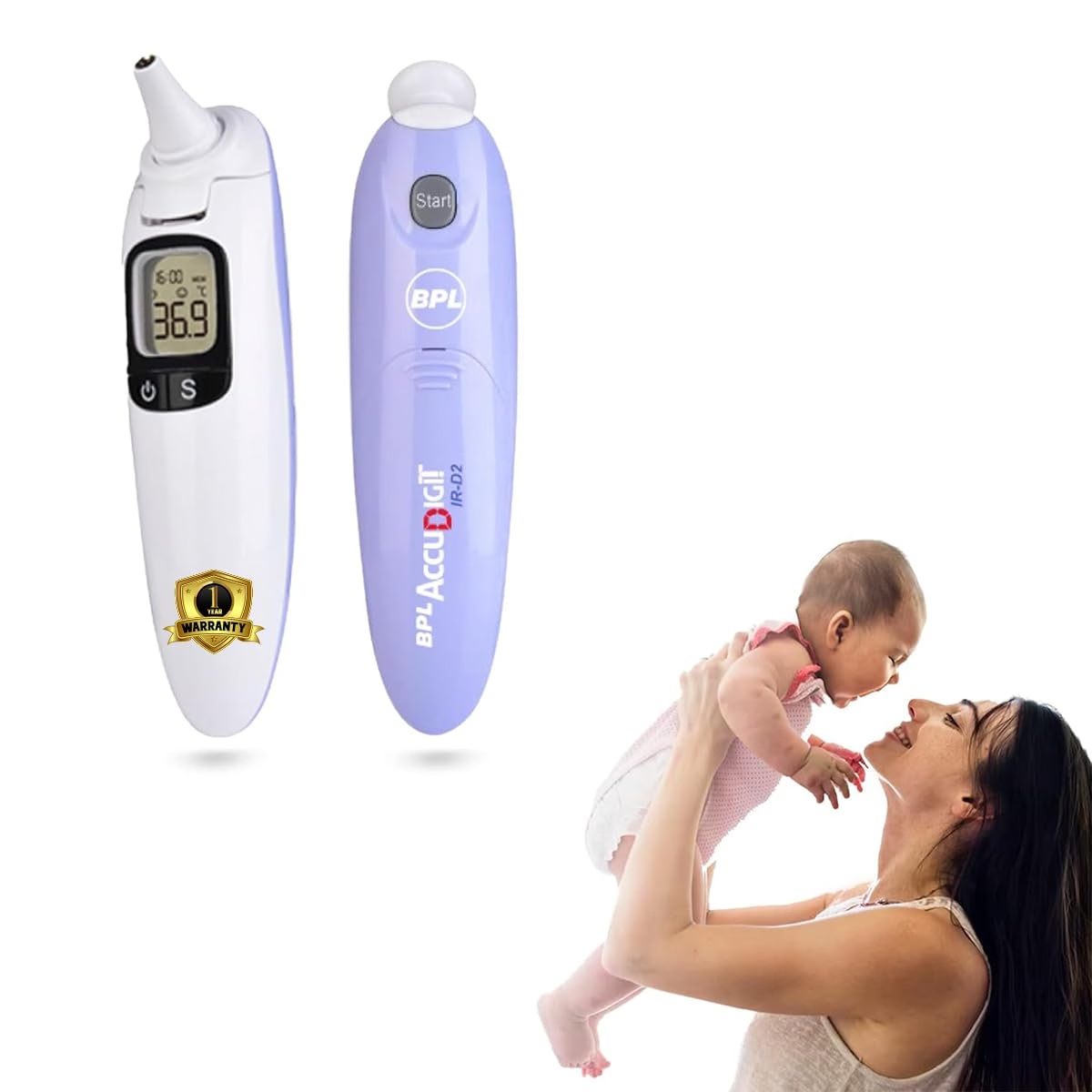
- BPL Accudigit IR-D2 Non-Contact Infrared Thermometer
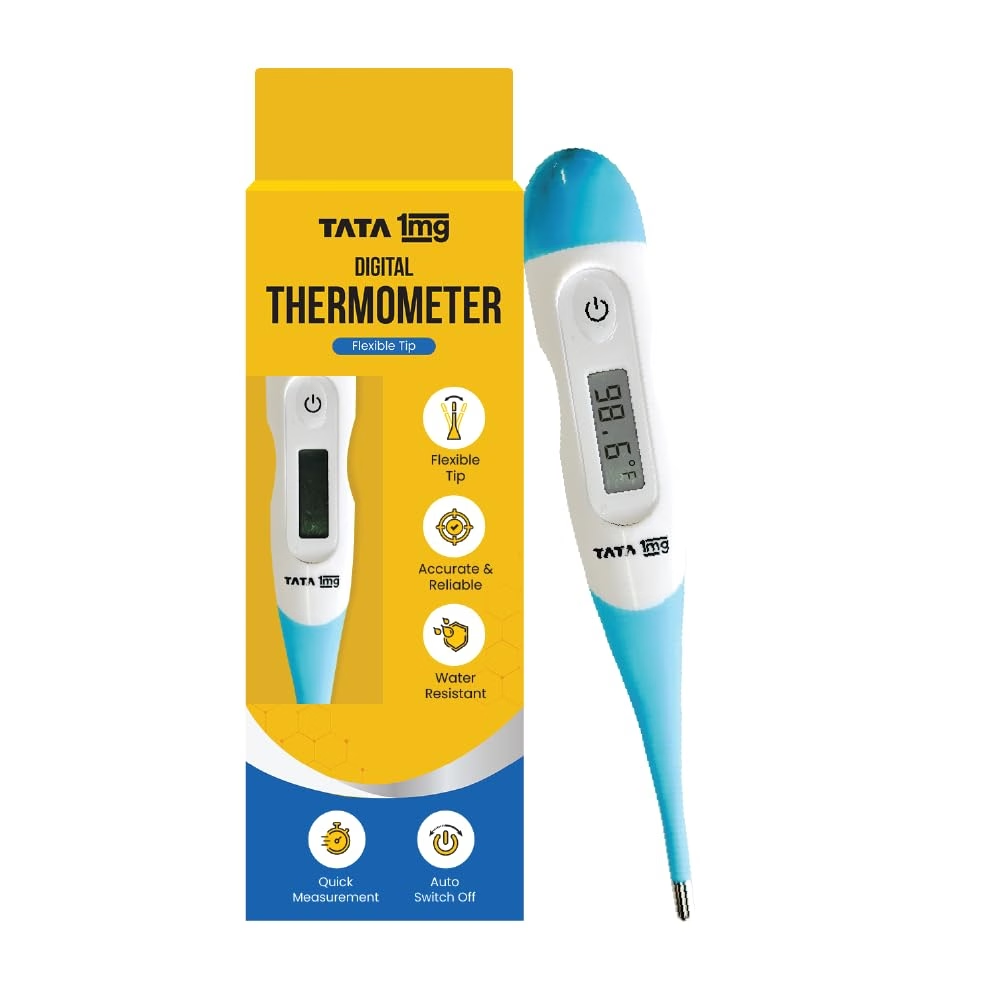
- Tata 1mg Flexible Tip Digital Thermometer
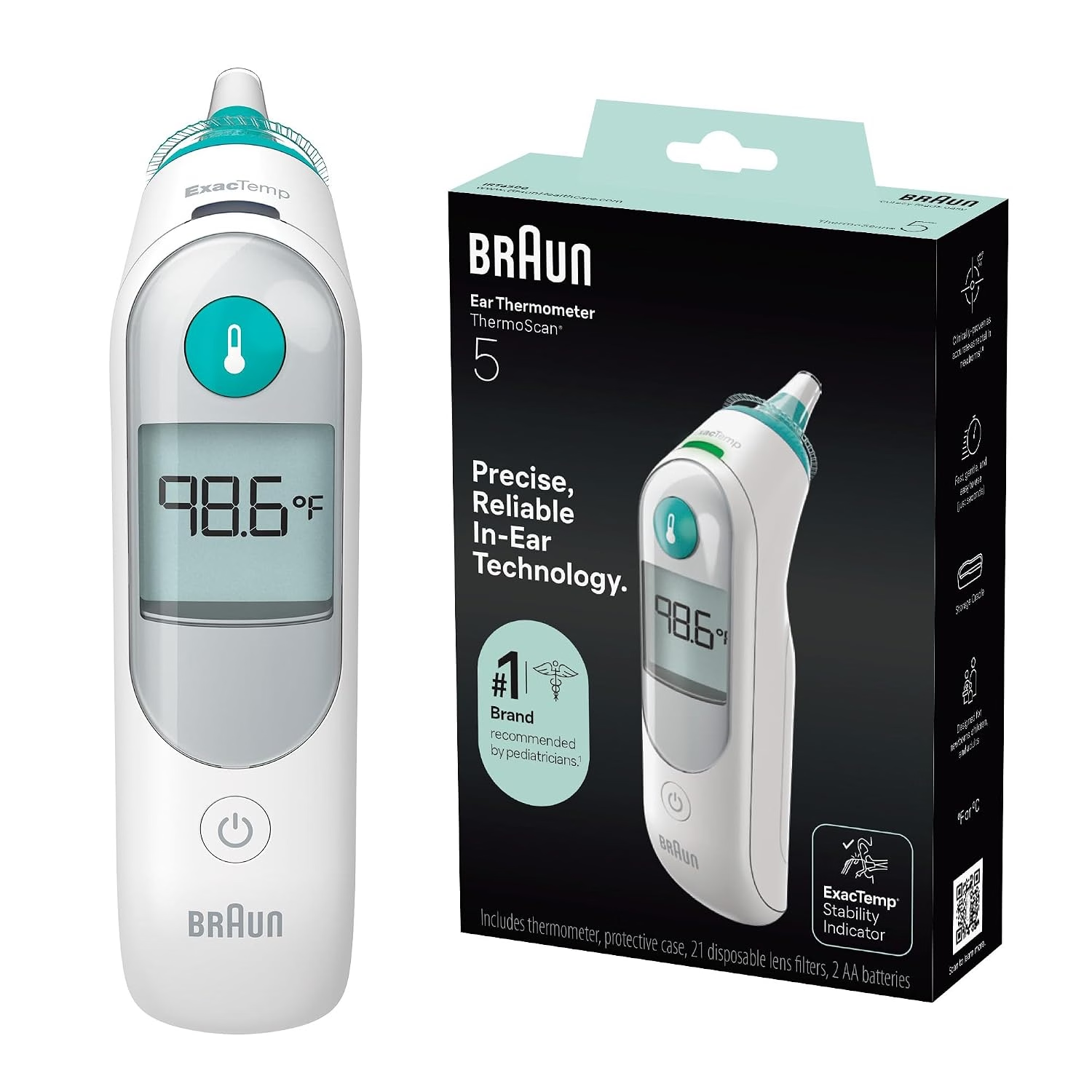
1. Braun ThermoScan 5 Ear Thermometer
Features
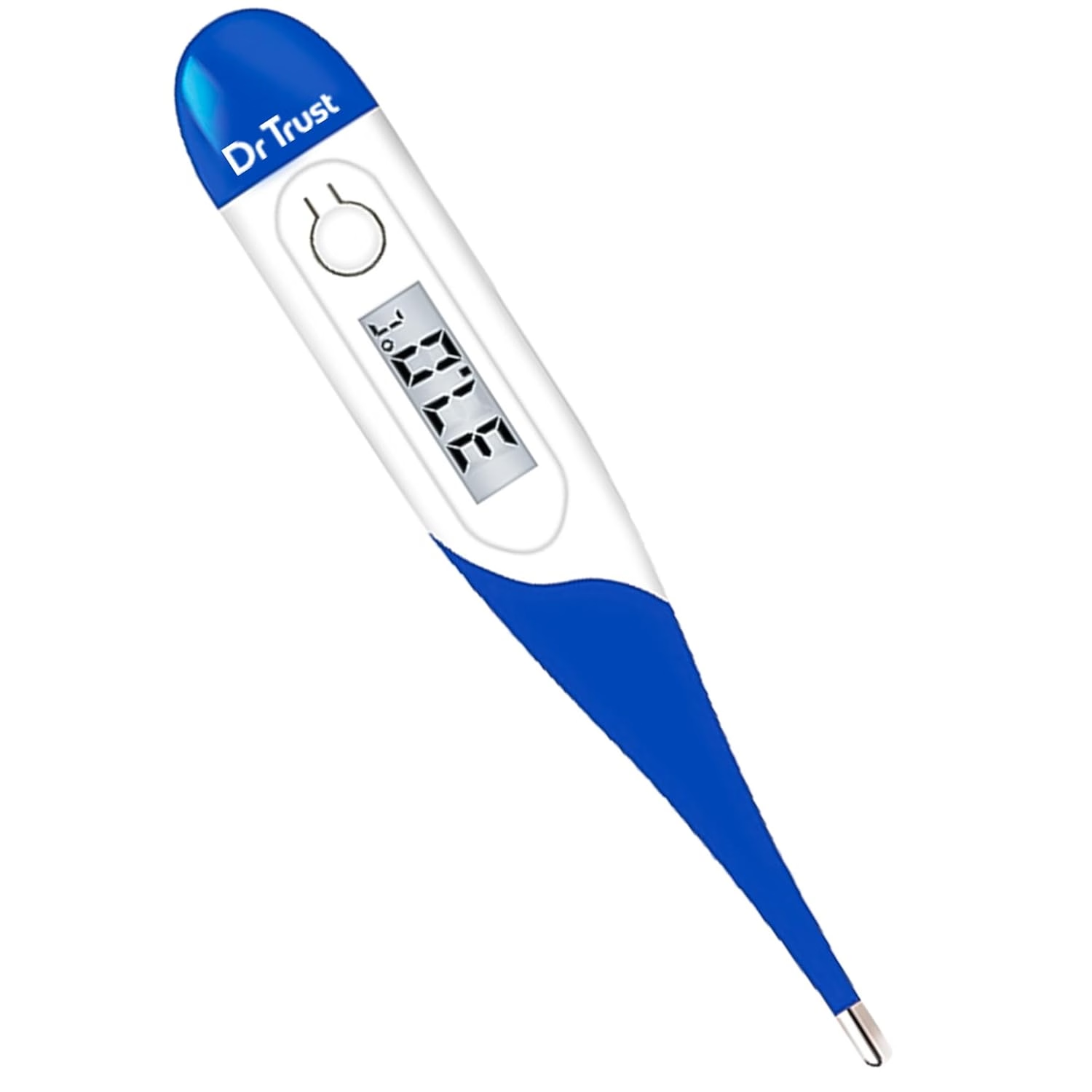
5. Tata 1mg Flexible Tip Digital Thermometer
Features
Baby Thermometer Comparison at a Glance
Reading times and memory come from the maker’s own product page where I could open one (named in brackets). I could not open a maker page for the Dr Trust 603, so its details come from the Amazon.in listing and I give no reading time for it.
| Pick | Type | Reading time | Memory | Age range |
|---|---|---|---|---|
| Braun ThermoScan 5 | Ear (infrared) | A few seconds (Braun) | Last reading (Amazon listing) | Adult, Kid, Toddler (Amazon listing) |
| Dr Trust 604 | Flexible-tip digital (contact) | About 30 seconds (Dr Trust) | Last reading (Dr Trust) | All ages including babies (Dr Trust) |
| Dr Trust 603 | Forehead (no-touch) | Not confirmed by a maker page | 30 readings (Amazon listing) | Adult, Kids, Infant (Amazon listing) |
| BPL Accudigit IR-D2 | Forehead (no-touch) | Within 1 second (BPL) | Last 10 readings (BPL) | Kid (Amazon listing); BPL’s page gives no age range |
| Tata 1mg Flexible Tip | Flexible-tip digital (contact) | 30 to 40 seconds (Tata 1mg) | Last recorded temperature (Tata 1mg) | Children and adults (Tata 1mg) |
Why Indian Parents Keep a Dedicated Baby Thermometer at Home
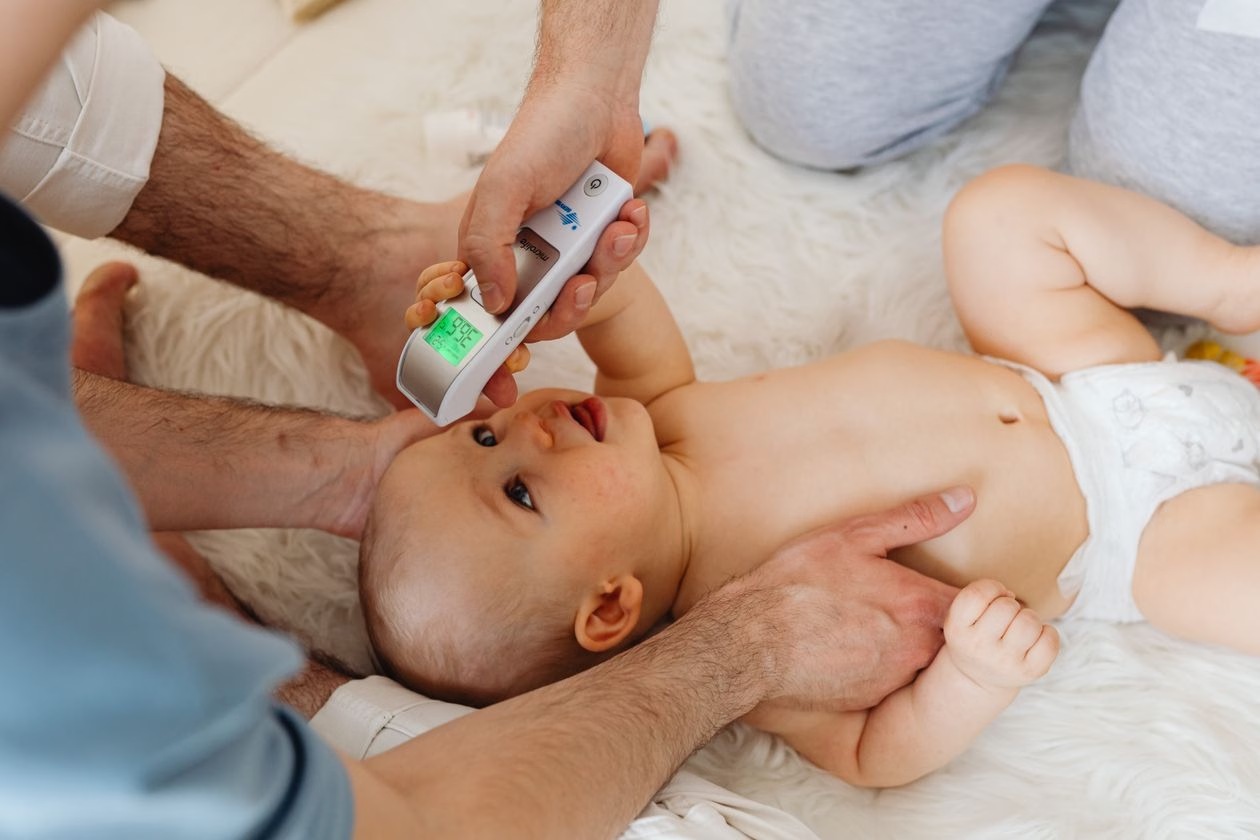
It is tempting to judge a fever by touch. A hand on the forehead is quick and free, and it is also unreliable. A warm room, a thick blanket, a crying spell or a feed can make a baby feel hot, and a real fever can hide under cool hands and feet. A baby thermometer turns a feeling into a number you can act on and repeat.
The number matters most when you talk to a doctor. The first questions on the phone are usually how high the temperature is and how long it has lasted. The NHS, for example, says a high temperature is 38°C or more and tells parents of babies under 3 months to get medical help straight away at that level. A trusted reading lets you make that call quickly, without arguing with yourself about how warm the baby feels.
There are Indian realities too. Vaccination days often end with a grumpy, warm baby. Seasonal infections move through a family and a crowded neighbourhood fast, and summer heat makes the touch test even less reliable. A simple, dependable baby thermometer saves a late-night dash to find a pharmacy. If you already use a video baby monitor at night, a baby thermometer is the natural partner: the monitor tells you the baby is restless, and the thermometer tells you whether to worry.
Baby Fever Basics: What the Numbers Mean
A fever is a sign that the body is fighting something, most often a viral infection, and it is not an illness on its own. Babies can also run warm after vaccinations, when they are overdressed, or after time in a hot room. What matters is the number, the baby’s age, and how the baby behaves: feeding, sleeping and responding to you.
India mostly reads temperature in Celsius, while many thermometers and foreign websites also show Fahrenheit. These pairs help when a device shows a different unit from the one your doctor uses:
| Celsius | Fahrenheit | What it usually means |
|---|---|---|
| 37°C | 98.6°F | A typical body temperature |
| 38°C | 100.4°F | The point the NHS calls a high temperature |
| 39°C | 102.2°F | A higher fever: the NHS uses this number as its call-for-help level for babies of 3 to 6 months |
Those cut-offs come from UK guidance, and your paediatrician may use different ones for your baby. Whatever the number, the signs below matter more than the thermometer.
Emergency signs: get emergency care immediately
If your baby has any of these signs, do not stop to take or repeat a temperature, and do not wait for a callback. Go to the nearest hospital emergency department or call your local emergency number straight away.
- difficulty breathing (you may notice grunting noises, or the stomach sucking in under the ribcage), or breathing very fast
- drowsy and hard to wake
- extremely agitated, confused, or crying without stopping
- a fit (seizure) for the first time, when they cannot stop shaking
- blue, grey, paler than usual or blotchy skin, or blue, grey or pale lips or tongue (harder to see on brown or black skin, so check the lips and tongue too)
- a stiff neck, or being bothered by light
- a rash that does not fade when you press a glass against it
- unusually cold hands and feet
- not responding as they normally do, or not interested in feeding or usual activities
This list follows the “Immediate action required” section of the NHS guidance on fever in children.
Urgent advice: contact a doctor the same day
Contact a doctor urgently, without waiting for the fever to pass, if your baby:
- is under 3 months old with a temperature of 38°C or higher, or you think they have a high temperature
- is 3 to 6 months old with a temperature of 39°C or higher, or you think they have a high temperature
- has a high temperature together with other signs of illness, such as a rash
- has had a high temperature for 5 days or more
- does not want to eat, or is not their usual self and you are worried
- shows signs of dehydration, such as fewer wet nappies, sunken eyes, and no tears when crying
How to Choose the Best Baby Thermometer
The right choice depends less on a brand name than on three things: your baby’s age, how your baby behaves when you take a reading, and how easy the device is to use half asleep. Work through the points below in order.
1. Start with the type that suits your baby’s age
Contact thermometers (a flexible tip under the arm) are the classic home choice and the type the NHS describes. Ear thermometers are quick but need correct positioning. No-touch forehead thermometers are the easiest on a sleeping or wriggling baby. Every model sets its own minimum age, so check the age range on the listing and in the manual, and ask your paediatrician what suits a newborn in your case.
2. Look at the age range, not only the title
A listing title can say “for babies” while the details table says “Adult”. I checked both for every pick. The Dr Trust 604 lists infants, the Dr Trust 603 lists Infant, the Braun lists Toddler, the BPL lists Kid and the Tata 1mg title says children and adults. Two popular models, an oral digital thermometer and a no-touch gun, were dropped because their listings show no sign of baby or child use and their details list adult only.

3. Reading time and how patient your baby is
A baby will not hold still for a minute. A reading that takes seconds instead of half a minute makes a big difference with a restless baby, which is why ear and no-touch models are popular. Flexible-tip thermometers are simple, but you keep the tip in place under the arm until the thermometer beeps, which the Dr Trust 604 and Tata 1mg pages put at roughly 30 to 40 seconds. Choose the speed your baby will tolerate.
4. Memory, fever alarm and units
A memory that stores the last reading, or several, helps when you report a trend to the doctor. A colour-coded backlight or fever alarm gives a signal at a glance in a dark room. Most Indian homes think in Celsius, so check the thermometer can show °C. The Dr Trust 603, the BPL and the Tata 1mg listings mention switching between Celsius and Fahrenheit.
5. Hygiene and cleaning
You will clean the baby thermometer often. A smooth probe wipes clean quickly and a waterproof body, as the Dr Trust 604 listing describes, is easy to rinse. Ear thermometers need disposable lens filters. A no-touch model avoids skin contact, which makes it easy to keep clean between family members.
6. Battery and auto shut-off
Check the battery type and choose a model with an auto shut-off, which several of these picks have.
Baby Thermometer Types: Ear, Forehead and Flexible Tip Compared
Ear (infrared) thermometers
An ear thermometer reads the heat from the eardrum area in about a second. It is fast and, when positioned well, consistent. The Braun ThermoScan 5 listing explains that its positioning system confirms good placement with a light and a beep. The weakness is technique: the wrong angle or ear wax can change a reading, and a very young baby has a small, curved ear canal. A new lens filter each time keeps it hygienic.
Forehead (no-touch) thermometers
A no-touch thermometer measures infrared heat from the forehead, usually from a couple of centimetres away. It is the gentlest option because it will not wake a sleeping baby, and it is quick. The cost is that distance, sweat, a fan or AC draught and a recent cry can all move the reading. Follow the manual for the correct distance and take a second reading before deciding.
Flexible-tip digital thermometers
This is the familiar stick with a soft, bendable tip. It touches the skin, usually under the arm for a baby, and beeps when done. It takes longer than an infrared model, but it is simple, sturdy and the style the NHS names for taking a child’s temperature at home. A flexible tip is more comfortable than a rigid probe.
Rectal and other types
Digital thermometers can measure in more than one place. The Dr Trust 604 and Tata 1mg product pages list oral, rectal and underarm measurement. Which site suits your baby is a question for your paediatrician, so read the manual and ask before you choose one. Forehead strips and pacifier thermometers also exist, but they sit outside this list.
Basic or Feature-Packed: What Extra Features Really Add
A longer feature list does not make a thermometer better for your baby. Before you pay for extras, ask what each one changes in a real night at home.
- Fever alarm and colour backlight: useful in a dark room, because you read the signal without squinting. It does not make the reading more accurate.
- Memory: helps you report a trend to the doctor. Writing times on your phone does the same job for free.
- Object or surface mode: a small bonus for checking a feeding bottle, but the main job is the body reading.
- Ear positioning signal: a real help to a new user, since the angle is the hardest part of ear readings.
- Waterproof body: makes cleaning easy, and is worth having on a contact thermometer.
- Auto shut-off and low battery warning: small features that save batteries and surprises.
For most families the sensible plan is one thermometer that suits the baby’s age and that everyone at home knows how to use.
Thermometer vs Touch, Strips and Smart Patches
A thermometer vs feeling the forehead
Touch tells you the baby feels warm, not how warm. It cannot tell a fever from an overdressed baby, and it cannot give the doctor a number. Use touch as a reason to take a reading, not a replacement for one.
A thermometer vs forehead strips
A stick-on forehead strip is not a thermometer for checking a fever. The NHS fever guidance names a digital thermometer, not a strip, for taking a child’s temperature, so use a proper thermometer when the number matters.
A thermometer vs a wearable or smart patch
Wearable temperature patches that send readings to a phone are a newer idea. One appeared in my search results with only a handful of ratings. Without a deep review history, I would not rely on one in place of a thermometer you already understand.
Who Should Buy Which Baby Thermometer (and Who Should Skip It)
Here is how I would match each pick to a household. Each verdict is drawn from the listing, not from hands-on testing.
1. Braun ThermoScan 5: buy it if you want the ear route
The Braun ThermoScan 5 ear thermometer has the strongest buyer record of the five: around 4.6 out of 5 across more than 14,000 ratings. The listing describes a pre-warmed tip, a positioning system with a light and beep, a memory for the last reading and 21 lens filters in the box. It is the pick for a parent who wants a fast reading and is willing to learn the ear technique. Skip it if your baby is a newborn and your doctor has not cleared ear readings, or if you dislike buying lens filters. Note that the listing mixes battery details, so read the box before you rely on a specific battery.
2. Dr Trust 604: buy it as the simple, everyday option
The Dr Trust 604 flexible tip thermometer is the most reviewed pick, with more than 24,000 ratings and a rating of around 4.1. Dr Trust’s own page says it takes a reading in about 30 seconds, is suitable for all ages including babies, kids and adults, is waterproof with an IP27 rating, and recalls the last reading when you switch it on. The page also lists oral, rectal and underarm use, so ask your paediatrician which site to use. It is a plain contact thermometer: little to learn and little to break. Buy it if you want something light that you can rinse clean. Skip it if you want a no-touch reading for a sleeping baby, or if 30 seconds is too long for your restless baby.
3. Dr Trust 603: buy it for sleeping babies and fever signals
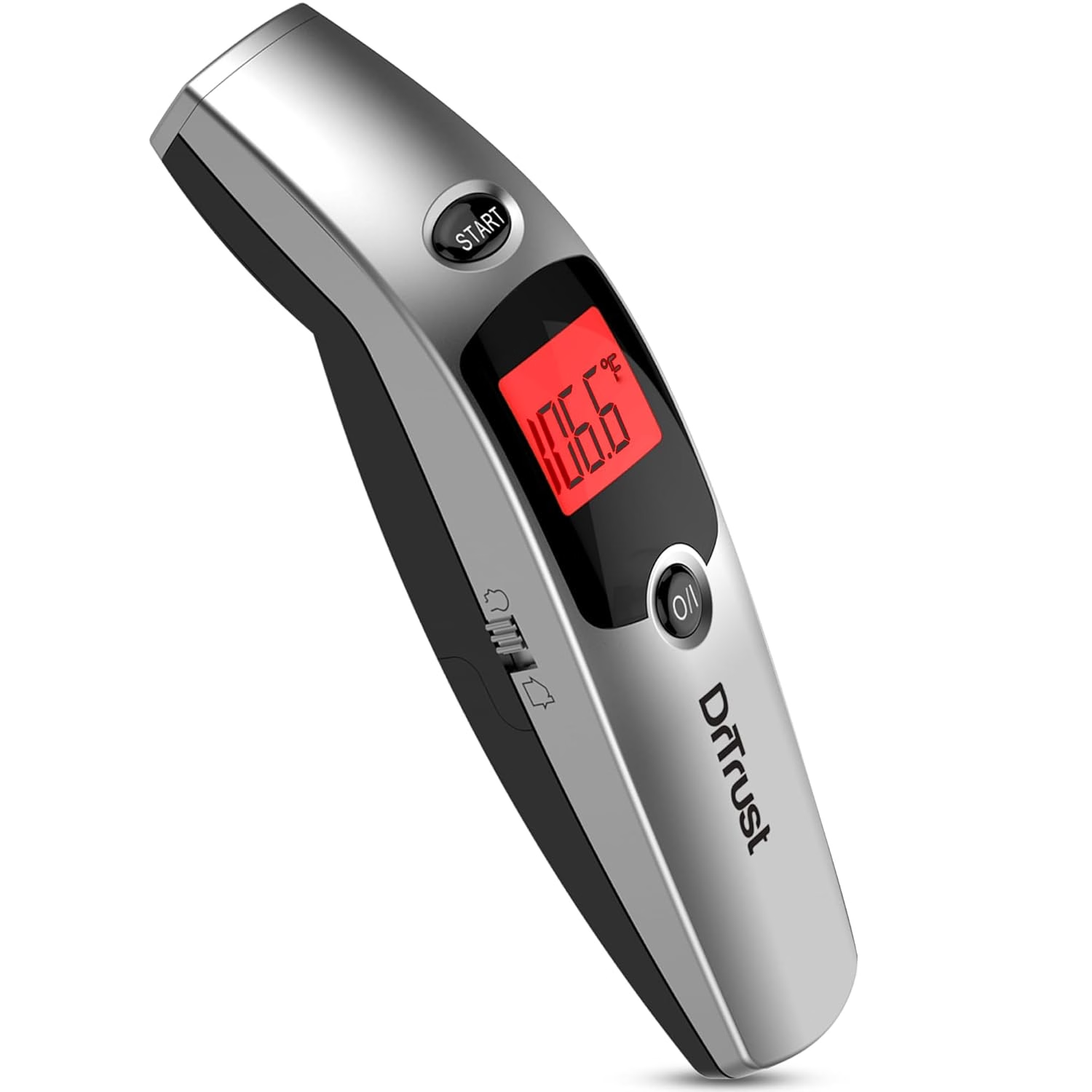
The Dr Trust 603 forehead thermometer is a no-touch model with a colour-coded backlight, a fever alarm and a memory for 30 readings. The listing also describes an object mode, handy for checking that a bottle of milk is not too hot. I could not open a maker page with a reading time, so I do not quote one. Buy it if you want to check a sleeping baby without waking them. Skip it if you cannot stand to take a second reading to check, since forehead readings can vary.
4. BPL Accudigit IR-D2: buy it for an Indian brand and a quick reading
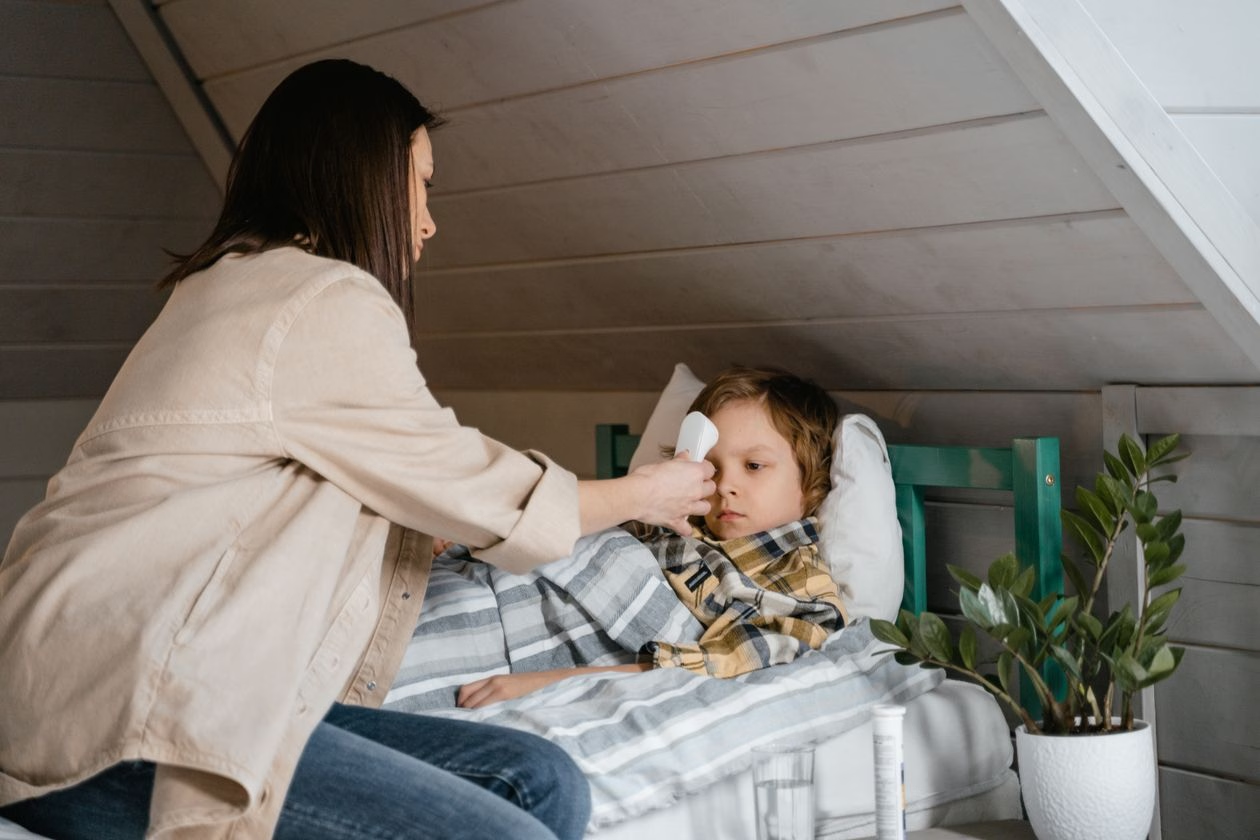
The BPL Accudigit IR-D2 comes from BPL Medical Technologies in Bangalore. BPL’s own page says it acquires a reading within 1 second, has a fever alarm, records the last 10 measurements, and switches between Celsius and Fahrenheit. The page describes forehead, eardrum and object modes, so read the manual to learn how each one is used. It suits a parent who prefers a familiar Indian healthcare brand and a fast no-touch reading. Skip it if you want the biggest pool of reviews, since it has fewer ratings than the Braun and both Dr Trust picks.
5. Tata 1mg Flexible Tip: buy it for simple, low-fuss use
The Tata 1mg flexible tip thermometer is a one-button digital thermometer with a memory that stores the last recorded temperature, and an automatic shut-off. Tata 1mg’s page gives a reading time of 30 to 40 seconds, lists oral, rectal and underarm use, and says it is for both children and adults; the Amazon details table lists adult, so confirm the age range on the box. It is a simple, low-fuss option for a travel bag or a grandparent’s house. Skip it if you need a no-touch reading or an ear reading, or if 30 to 40 seconds is too long for your baby.
Where to Buy a Baby Thermometer in India
You will find baby thermometers at pharmacies, medical stores, large supermarkets and online. A few simple checks keep you safe wherever you shop:
- Check the age range on the box and in the manual, not just the product name.
- Buy from the brand’s own store or an authorised seller, and keep the invoice for any warranty claim.
- Look at the pack contents. An ear thermometer should come with lens filters, and a flexible-tip model should come with a battery.
- Avoid listings with very few ratings and big claims about medical accuracy.
- Open the box and check the seal, the battery compartment and the display on the day it arrives.
- Keep the manual. The distance and positioning rules in it matter more than any feature list.
When you shop through the buttons on this page, the price on Amazon is the live price. We do not print prices, because they change often.
How to Use a Baby Thermometer for the First Time
Read the manual and practise when your baby is well
Take a few readings when your baby is healthy and calm, so you know what a normal number looks like for your baby and how the device feels in your hand. Then a fever night is not your first try. Write the normal readings down, or save them on your phone.
Take the reading the way the manual says
For a flexible-tip thermometer, place the tip in the top of the armpit and hold the arm gently against the body until it beeps. For a forehead model, hold it at the listed distance from the middle of a dry forehead, without a fringe or hat in the way. For an ear model, fit a new filter, straighten the ear canal gently as the manual describes, and wait for the positioning signal.
Take a second reading and note the time
A single reading can be off. Take a second one, note both with the time, and write down anything else you notice, such as feeding, sleep and fussiness. This note makes the call to the doctor short and useful. If your baby is under 3 months and the temperature is high, do not wait to repeat readings: contact a doctor urgently.
Share the routine with everyone who cares for the baby
If grandparents, a nanny or a creche look after your baby, show them how to take a reading and where the thermometer lives. Agree on one thermometer, one method and one way of writing the number down. When everyone measures the same way, the readings you pass on to the doctor can be compared, and a spike is easier to spot.
Avoid readings right after activity
A baby who has just come in from the sun, finished a bath, cried hard or been wrapped tightly can read higher than their true temperature. Remove extra layers, wait a few minutes in a normal room, and then measure.
Baby Thermometers for Indian Homes: Heat, Humidity and Power Cuts
Indian conditions change how you use and store a thermometer. Summer heat can push a baby’s skin temperature up after a walk or a ride on a two-wheeler, so give a few minutes in a cooler room before you measure. A ceiling fan or a direct AC draught can cool the forehead and nudge a no-touch reading down, so step away from the airflow before you take it.
Because every pick here is battery powered, a power cut does not stop it working.
If your family travels often, by train or by car to your hometown, pack the thermometer in your hand baggage with its case. A simple flexible-tip model is the easiest to carry.
Care, Cleaning and When to Replace a Baby Thermometer
A baby thermometer lasts a long time if you treat it well. Wipe the probe or the sensor window with an alcohol swab after each use and let it dry. Keep the sensor of an infrared model free of dust and fingerprints, because a dirty lens can affect a reading. Store it in its case, away from damp bathroom shelves and direct sun.
Replace the battery on schedule, or at the first sign of a low battery message, and keep a spare. If a reading looks strange, repeat it and compare with a second thermometer. When two thermometers regularly disagree by a large amount, or the display flickers, retire the old one.
Replace ear lens filters after every use. If your baby has a cold or an ear infection, ask your doctor which reading to trust.
Baby Thermometer Safety: Things to Watch Out For
- Avoid old glass or mercury thermometers. Choose a digital model made for babies.
- Do not use a thermometer outside its age range. Check the manual first.
- Do not force a probe. A baby who fights the reading needs a calmer moment or a different type.
- Do not rely on a single reading, and do not treat a thermometer as a diagnosis.
- Keep small parts such as batteries and lens filters away from a baby’s reach.
- Seek emergency care immediately for any emergency sign listed in Baby Fever Basics above.
- Contact a doctor urgently for a fever in a baby under 3 months, a fever that lasts several days, or any sign that worries you.
A baby thermometer is a tool for deciding when to call a professional, not a substitute for one. Use NHS fever guidance as a general reference, and keep your own paediatrician’s number next to the thermometer. For background on how these devices work, the infrared thermometer article gives a plain overview.
Final Thoughts: Picking the Best Baby Thermometer for Your Home
If you want one clear recommendation, the Braun ThermoScan 5 is the pick with the best buyer record, and it suits parents ready to learn the ear technique. If you want the simplest everyday tool, the Dr Trust 604 has the largest pool of reviews. For a sleeping baby, the Dr Trust 603 and the BPL Accudigit IR-D2 offer no-touch readings, and the Tata 1mg flexible tip is a simple, low-fuss option.
Whichever you choose, the best baby thermometer is the one you have practised with, can find in the dark and keep clean. Check the age range, and note the time with every reading. Once the fever is gone and your baby is back to rolling and playing, our guides to the best baby play mats in India and the best baby walkers in India cover what comes next.
Frequently Asked Questions
What temperature counts as a fever in a baby?
The NHS says a high temperature is 38°C or more. It advises urgent medical advice for a baby under 3 months at 38°C or higher, and for a baby of 3 to 6 months at 39°C or higher. These are UK guidelines, so treat them as a reference and follow your own paediatrician’s advice. If your baby shows any emergency sign described above, seek emergency care immediately instead of waiting to take a reading.
Which type of baby thermometer is best for a newborn?
There is no single answer, so ask your paediatrician before you buy. The NHS recommends a digital thermometer placed under the armpit for children. Ear and forehead thermometers are faster, but each model sets its own minimum age, so read the age range on the box and the manual before using one on a very young baby.
Are forehead (no-touch) baby thermometers accurate?
They are quick and gentle. Readings can shift with distance, sweat, a draught, or a baby who just came in from outside. Hold the thermometer the way the manual says, take a second reading, and confirm a high number with a contact thermometer.
Can I use an ear thermometer on my baby?
Yes, if the age range allows it. The Braun listing gives the age range as Adult, Kid and Toddler. The small ear canal of a young baby makes the angle harder, so use the positioning light and beep, fit a clean lens filter each time, and ask your doctor about using it on a baby in the first few months.
How do I clean a baby thermometer?
Follow the manual for your model. In general you wipe the probe or sensor with an alcohol swab after each use and let it dry. Only put a thermometer under water if the maker says it is waterproof, as Dr Trust does for the 604 (IP27 rating). Ear thermometers need a fresh lens filter every time.
Can I use one thermometer for the whole family?
You can if the age range covers everyone. All five picks here are listed for babies, kids or adults in some form. For hygiene, wipe the thermometer after each person, and keep a lens filter pack for ear models. Keep one device as the main baby thermometer, so readings stay easy to compare over a few days.
Is a thermometer with memory worth it?
It helps. When you call the doctor they usually ask what the temperature was and when. A thermometer that stores the last reading, or up to 30 readings as on the Dr Trust 603, saves you from guessing. Writing readings and times on your phone works as well, so memory is a nice extra, not a must.
How long should I wait before taking a second reading?
Check the manual for your model, because the gap differs. As a rule, wait a short while so the sensor can settle, then hold the thermometer the same way again. If two readings are far apart, take a third and note all of them with the time for your doctor.
Related reads:

Leave a Reply